Last update:
Hanse Sail Rostock 2025
Impressions and insights from the popular event in Rostock
Half a million visitors, more than 100 ships, approximately 13,000 sailing trips sold through the Hanse Sail booking office alone, four days packed with highlights on land and water, and very often glorious sunshine with moderate winds: the organisers can draw a positive conclusion from this year's Hanse Sail. Hanse Sail continued its success story in 2025, confirming its excellent reputation. However, there are also a few points that give me pause.
The fact that the weather doesn't always cooperate was unfortunately something the Hajkutter crew experienced firsthand. After the Hajkutter Festival in Nysted, they were unable to make the crossing to Rostock as usual with crew and guests on board. A storm was still raging across the Baltic Sea, preventing another edition of the popular Hajkutter Regatta.
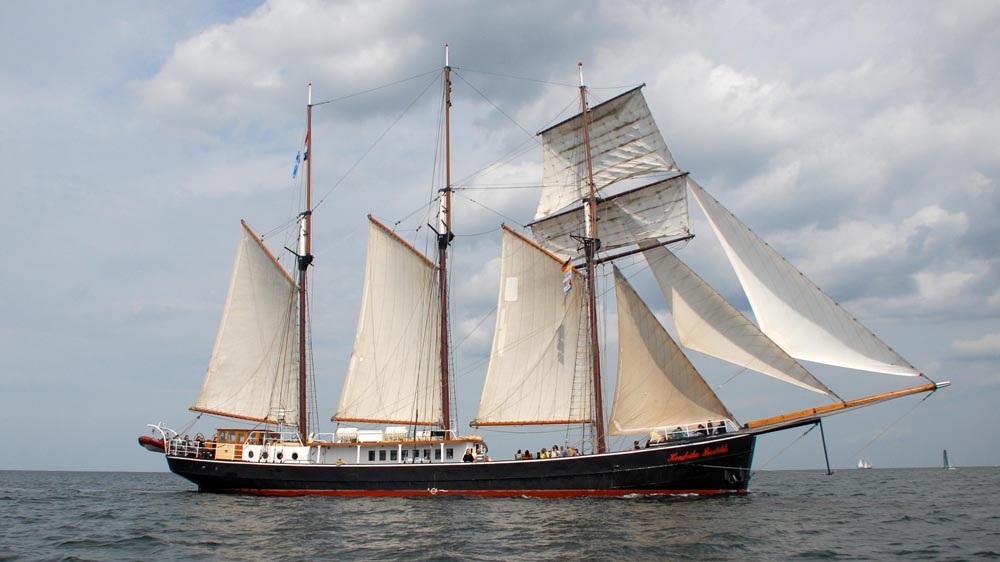
"Hendrika Bartelds" at Hanse Sail 2025
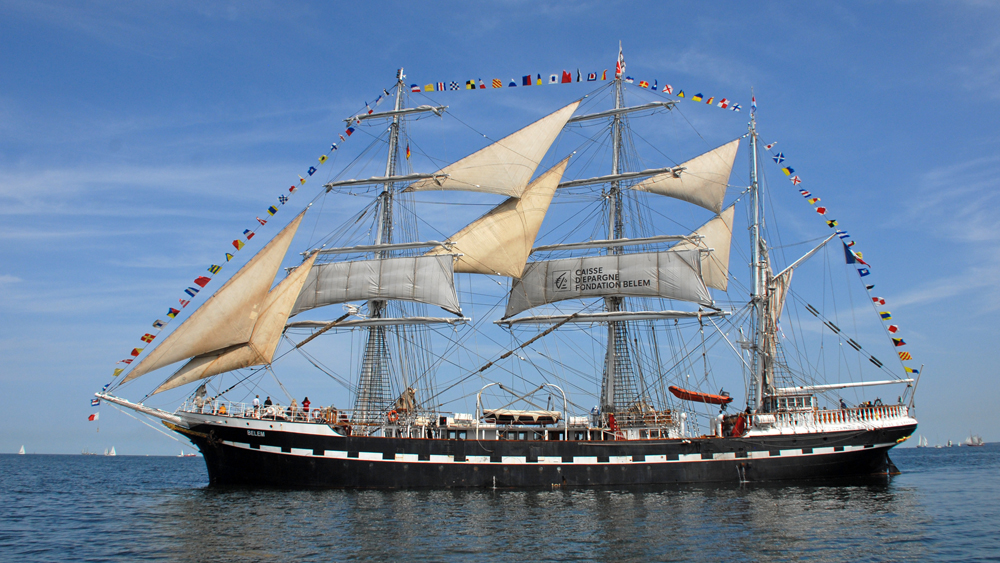
Bark "Belem" in Rostock
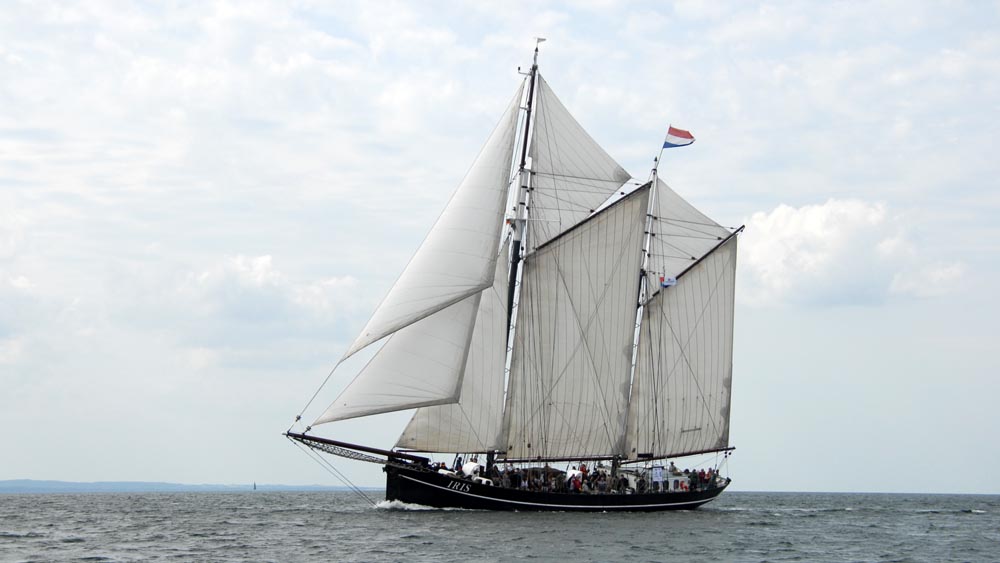
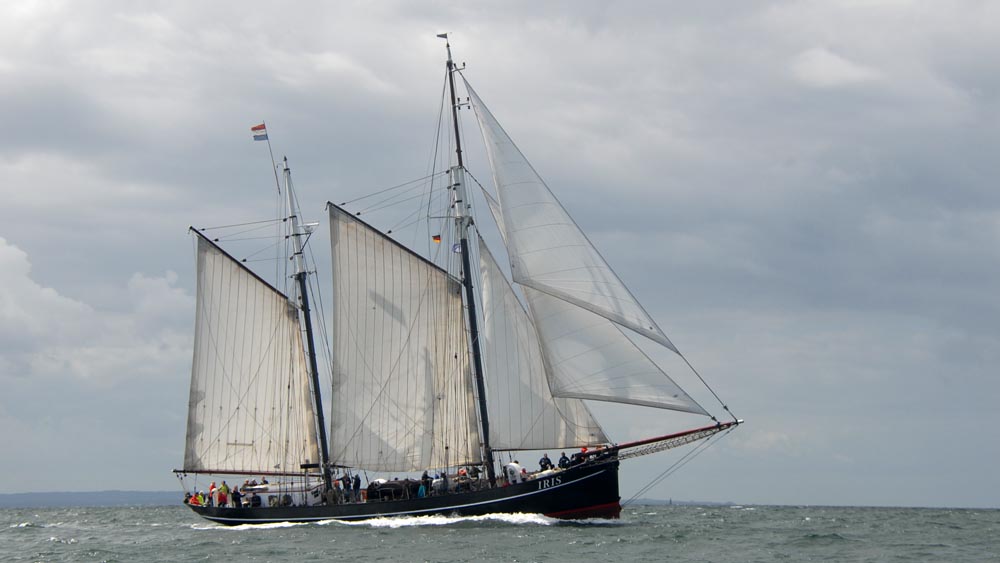
Herring logger "Iris" sailing the Schooner Race 2025
So, things didn't start in Rostock with the traditional fishing boats, but with the arrival of a very special guest: the French barque "Belem". The operators sent the ship on a voyage in 2025, visiting ports in Northwest Africa, along the coast of Western Europe, and on to Norway and Sweden. Rostock was one of the ports of call, much to the delight of the Hanse Sail visitors. As the only tall ship present, however, the "Belem" couldn't quite compensate for the "forests of masts" of large sailing vessels that had dominated the Hanse Sail in previous years. Cruise ships, the bright red lightship "Elbe 1 Bürgermeister Oswald", and ships of the German Navy were more prominently featured at the Warnemünde passenger quay in 2025. Visitors also appreciate the participation of such ships without sails. The occasional queues at the gangways before boarding and exploring a ship, and the hundreds of spectators, especially during the arrival and departure of cruise ships at the west and east piers in Warnemünde, are proof of this. The appeal of these visitors to Hanse Sail is undeniable.
And what about the sailing ships? It was impossible to miss the fact that there were fewer in 2025. But I asked visitors who were too vocal about this at the pier heads, even complaining about how little was on offer this year, how many sailing trips they had booked last year or this year. The ships come to Rostock because they want to earn their living with passenger trips. Everything has to be geared towards that, from bookings and boarding conditions to the activities offered during the trip. If you talk to ship operators, for example, who are staying away from Hanse Sail this year, you hear the argument that they want to avoid the hustle and bustle with the crowds and, above all, the deafening noise. That this is possible was demonstrated this year by the crew of the "Landrath Küster". They registered late and secured their berth in the Warnemünde Yacht Harbour Residence, which has its advantages and disadvantages. An important question immediately arises: how do potential sailing guests get on board? "That actually worked out!" the skipper told me, but he also knows it's a sensitive issue. The crew's needs, catering deliveries, and wastewater disposal, if necessary, all have to be organised. Not every vessel can navigate the narrow entrance, and the number of berths is limited. That said, you definitely have a quiet berth, which is very well suited, for example, for the potential fleet of Hajkutter boats. And with three-hour trips, you're immediately on the Baltic Sea without having to navigate through the harbour area and along the river Warnow – an advantage that can be emphasized when booking sailing guests. I see opportunities and potential for improvement in the future. I am also familiar with a procedure from other ports where the berth and the boarding of sailing guests are separated, e.g. by the use of pontoons.
No "Gorch Fock II", no "Alexander von Humboldt II", no "Roald Amundsen", and not yet a "Greif" either. Various reasons existed for the absence of large German sailing ships at Hanse Sail 2025. The Tall Ships Races 2025 concluded in early August in the Danish North Sea port of Esbjerg, from where some of the predominantly training and youth sailing ships continued on to participate in SAiL 2025 in Bremerhaven in mid-August. Rostock was not an option for them due to scheduling conflicts.
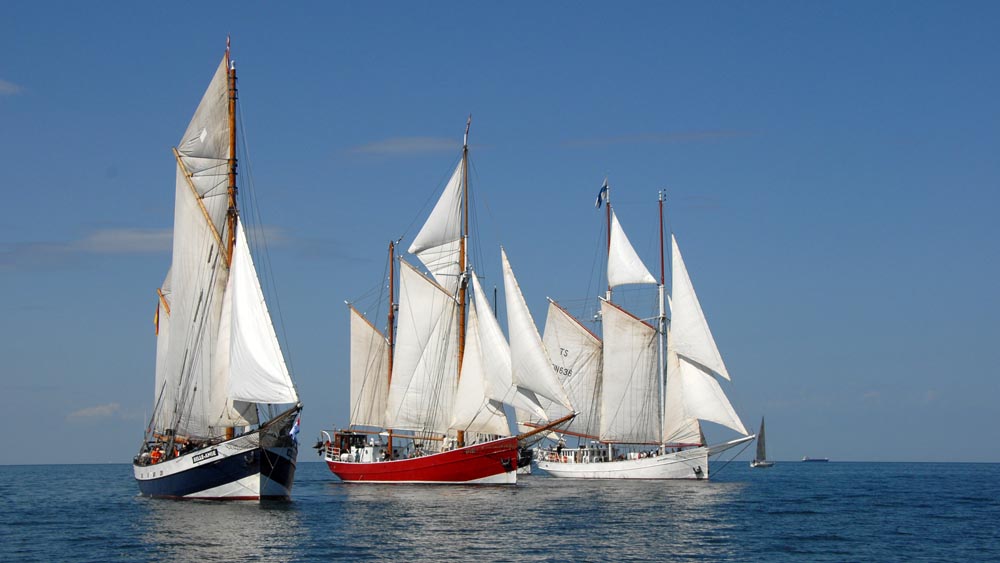
A logger meeting on the water
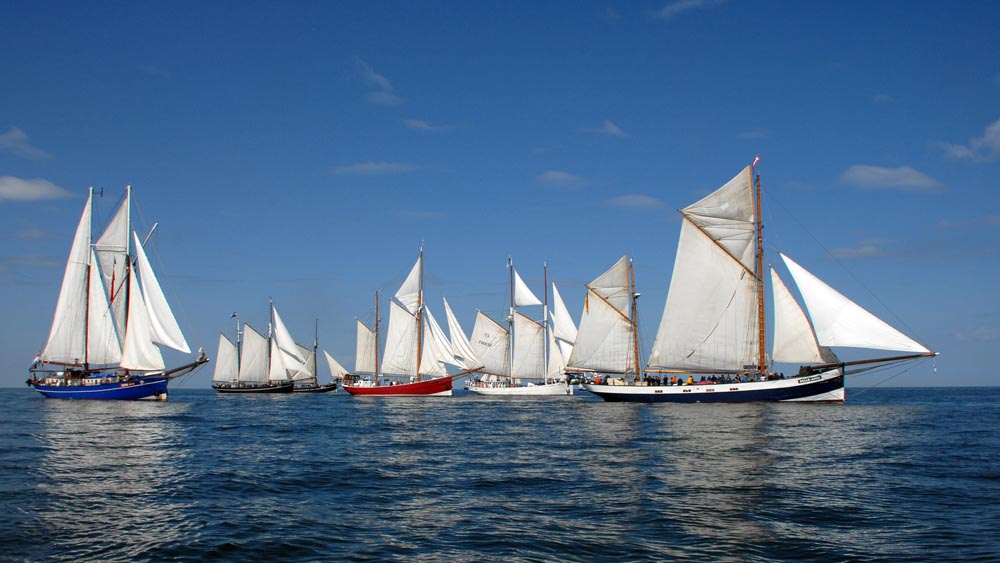
Group photo of the former herring loggers during the Hanse Sail 2025

Photo shooting with former herring loggers
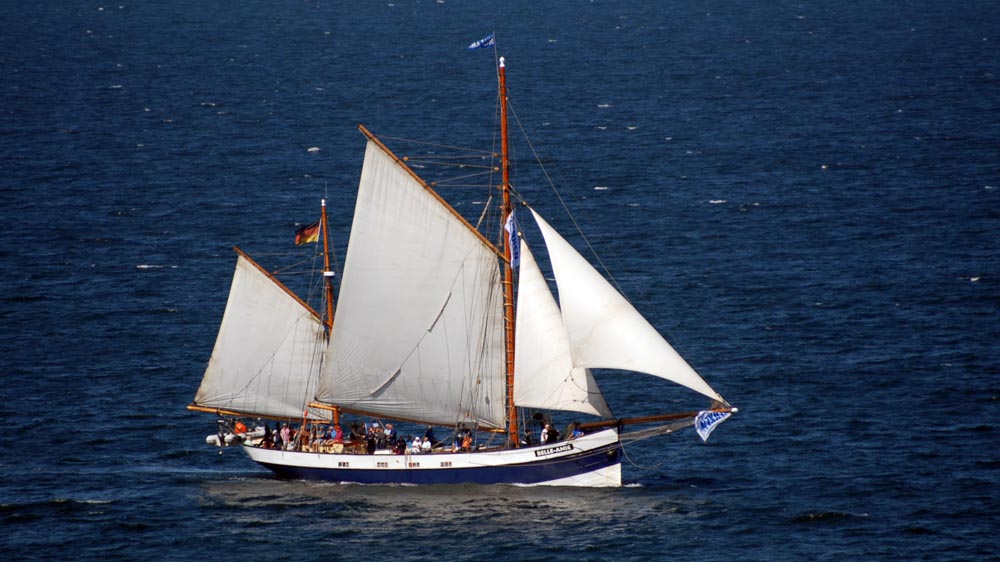
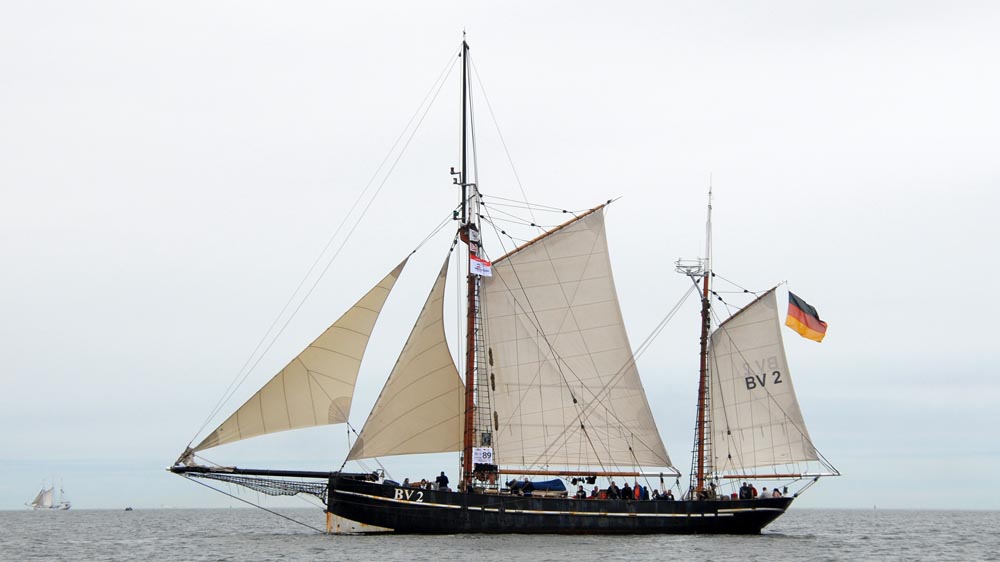
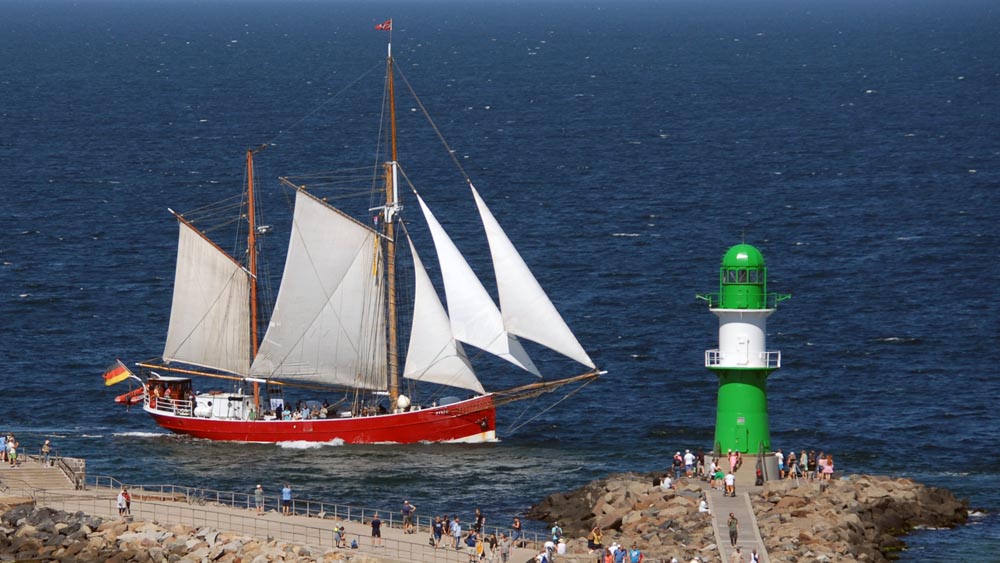
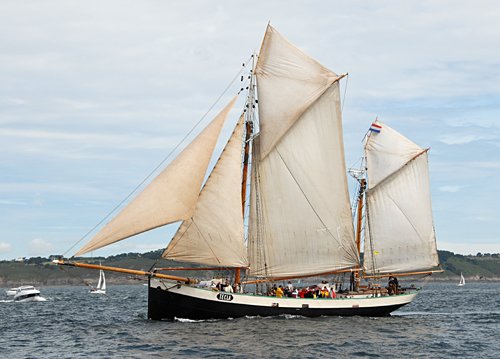
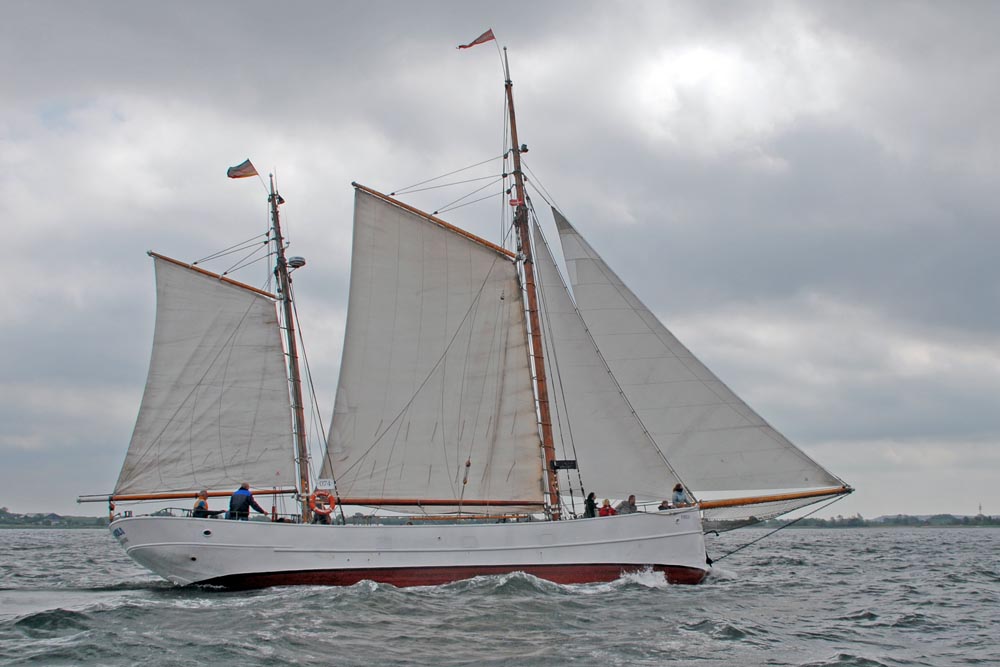
During the traditional crew meeting of the Hanse Sail, a conversation took place with the crew of the German traditional sailing ship "Ryvar". Like this former herring logger, other ships of this type come to Rostock every year. We agreed to revisit the idea of a staged photo with identical herring loggers under sail on the Baltic Sea in the coming days. Two years ago, we had failed to do so due to various unfavorable conditions. The crew of the "Ryvar" promised to promote the idea to the captains of the other loggers, who readily agreed. On Friday of the Sail, the opportunity arose for a photo shooting on the Baltic Sea off Warnemünde, which I found very exciting and which was one of the highlights of Hanse Sail 2025. The "Ryvar", "Vegesack BV2" and "Belle Amie", the "Joanna Saturna", "Oban" and "Iris" have been in the photo.
Besides the Hajcutters and herring loggers, the replicas of ships from the Hanseatic era are a recurring highlight for spectators at Hanse Sail Rostock. Three of these ships were present. Since 2021, the Pomeranian cog "Ucra", which comes from Ueckermünde, has been participating very successfully the Hanse Sail. After initial, very cautious appearances, now she can be seen sailing on the Warnow River, weather permitting. If a "group photo" of the cogs sailing in or out together were to be taken, as happened at the 2006 gathering of medieval ships immediately before the Hanse Sail, the sailing guests, spectators ashore, and the press would certainly be thrilled. The loggers have shown how it's done!
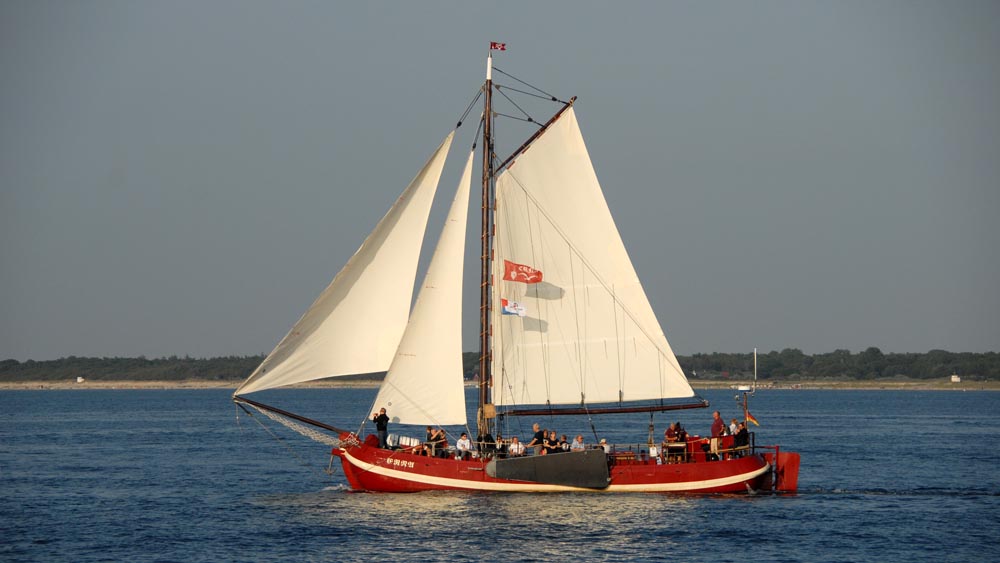
Evening sailing trip of the Paviljoen Tjalk "Erna"
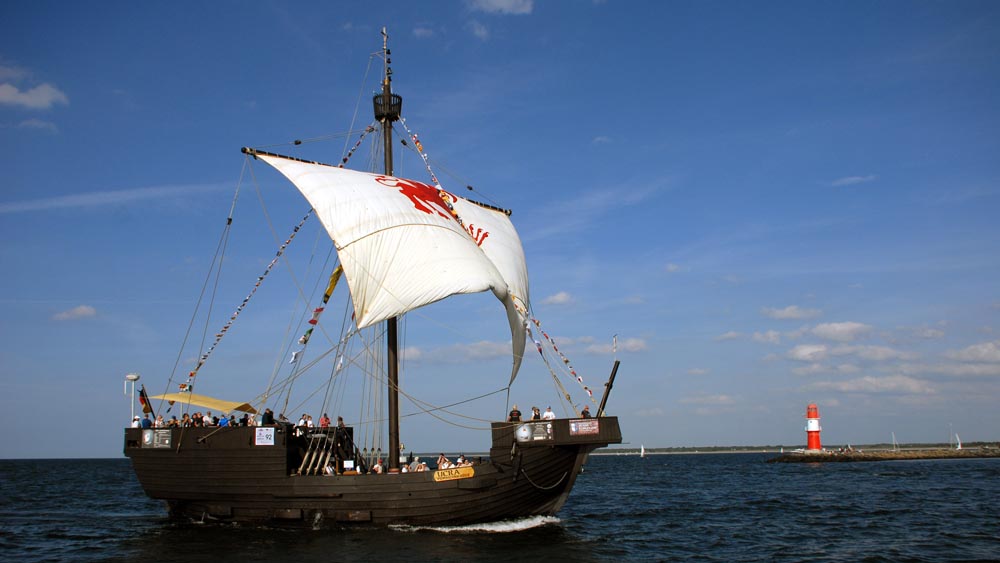
Pomeranian cog "Ucra" at the Hanse Sail 2025
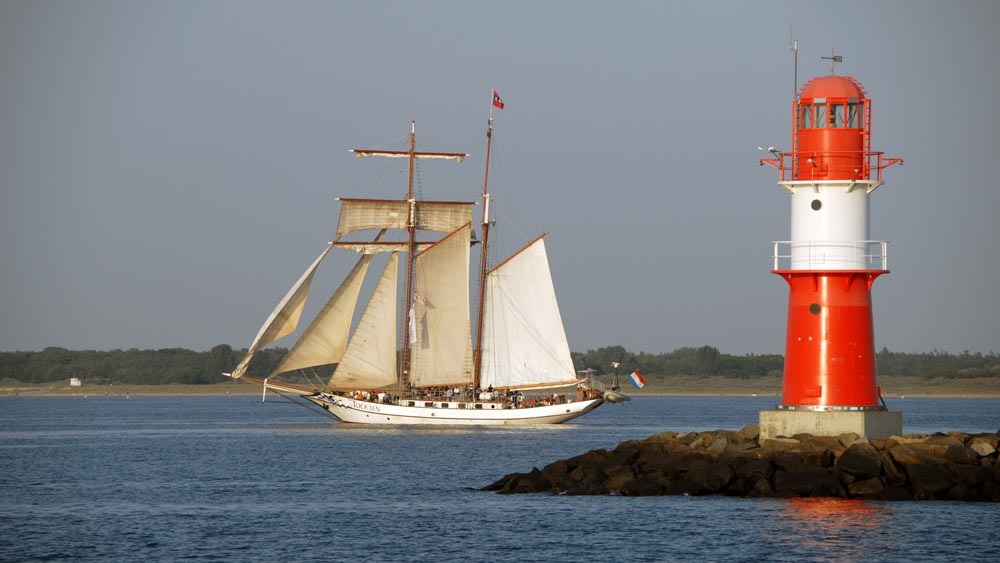
Topsail schooner "J. R. Tolkien" off Warnemünde
One topic that was discussed again this year is the planned Warnow Bridge, which would if realised divide Rostock's city harbour. When I spoke about it with a Dutch skipper, he stated quite clearly: "That could mean the end of Sail Rostock. I certainly won't be coming anymore. We need the city harbour as it is for turning and maneuvering. It's also a matter of safety." This year, due to the construction work on the Kempowski Embankment, the ships were moored in clusters of up to four or five vessels, which significantly hampered the boarding for passengers. Both the organisers and city officials should listen to these arguments and find solutions, because the fact is: without the Dutch charter fleet, there would be no Hanse Sail Rostock as we know it today. Despite the ongoing construction, the city harbour remained the vibrant heart of the event in 2025. However, the ships will have to contend with restrictions again next year, for which the Hanse Sail organisers ask for their understanding.
Herring loggers -
fascinating sailing ships with an interesting history
Herring fishing with so-called loggers was a significant industry from around 1860 until the 1970s and 1980s, particularly in the Netherlands and Germany. This included the aforementioned vessels specifically designed for this type of fishing, as well as onshore operations where the catch, gutted and salted at sea, was processed for sale. Well-known German locations for these factories, known as loggeries, were Emden, Bremen-Vegesack, Leer, Elsfleth, and Glückstadt.
Herring loggers underwent continuous development over the years of their use in fishing, originating in the Netherlands and among French canal fishermen. The steel herring logger primarily considered in this article represents a development stage from the beginning of the 20th century, was between 25 and 30 meters long, approximately 6 meters wide, and had a draft of up to 3 meters. These sailing vessels were rigged as ketches and also featured a diesel engine as an auxiliary propulsion system.
Fishing took place primarily in the North Sea. Just like the ships, fishing techniques also evolved over the years. Initially, drift nets were used, later trawls and ring-shaped nets were employed.
Some former herring loggers